Kenya, Rungeto FCS, Issue 01
Kenya, Rungeto FCS, Issue 01
Red Fruits, Mint accent, Juicy
Couldn't load pickup availability
Shipping
Shipping
Currently shipping Canada, US, Europe and Hong Kong. Shipping and taxes calculated at checkout.
Brewing Recipe
Brewing Recipe
for pour over:
15 grams of coffee / 250 grams of water
ideal brew time: 2 min 30 sec - 3 min
water temperature: 205 degrees ferenheit
for espresso:
17g in / 34g yield 1:2 ratio
ideal extraction time: 30 seconds
Specification
Specification
- Producer
- évery specialty coffee
- Altitude
- 1,600–1,800 masl
- Variety
- SL28, SL34, Batian, Ruiru 11
- Harvest
- October–December
- Process
- Fully Washed
- The cup
- Light Roast
Description
From the Highlands of Kirinyaga
In the highlands of Kirinyaga, Kenya, coffee cultivation is shaped by altitude, fertile soils, seasonal rainfall, and the collective efforts of a farming community. Here, between 1,600 and 1,800 metres above sea level, the Rungeto Farmers Cooperative Society brings together approximately 1,400 farmers.
Clay loam soils, average annual rainfall of 1,400 millimetres, and an average temperature of 20.5°C form the setting for SL28, SL34, Batian, and Ruiru 11. Flowering typically takes place from February to March, with harvest following between October and December.
At the heart of this story is the Kiangoi washing station. Following the liquidation of the former Ngiriama Cooperative Society, whose assets included coffee-processing facilities, Kiangoi reopened for coffee processing in 1997. Rungeto FCS now reports annual production of approximately 1,200 bags of 60 kilograms.
A process shaped by patience
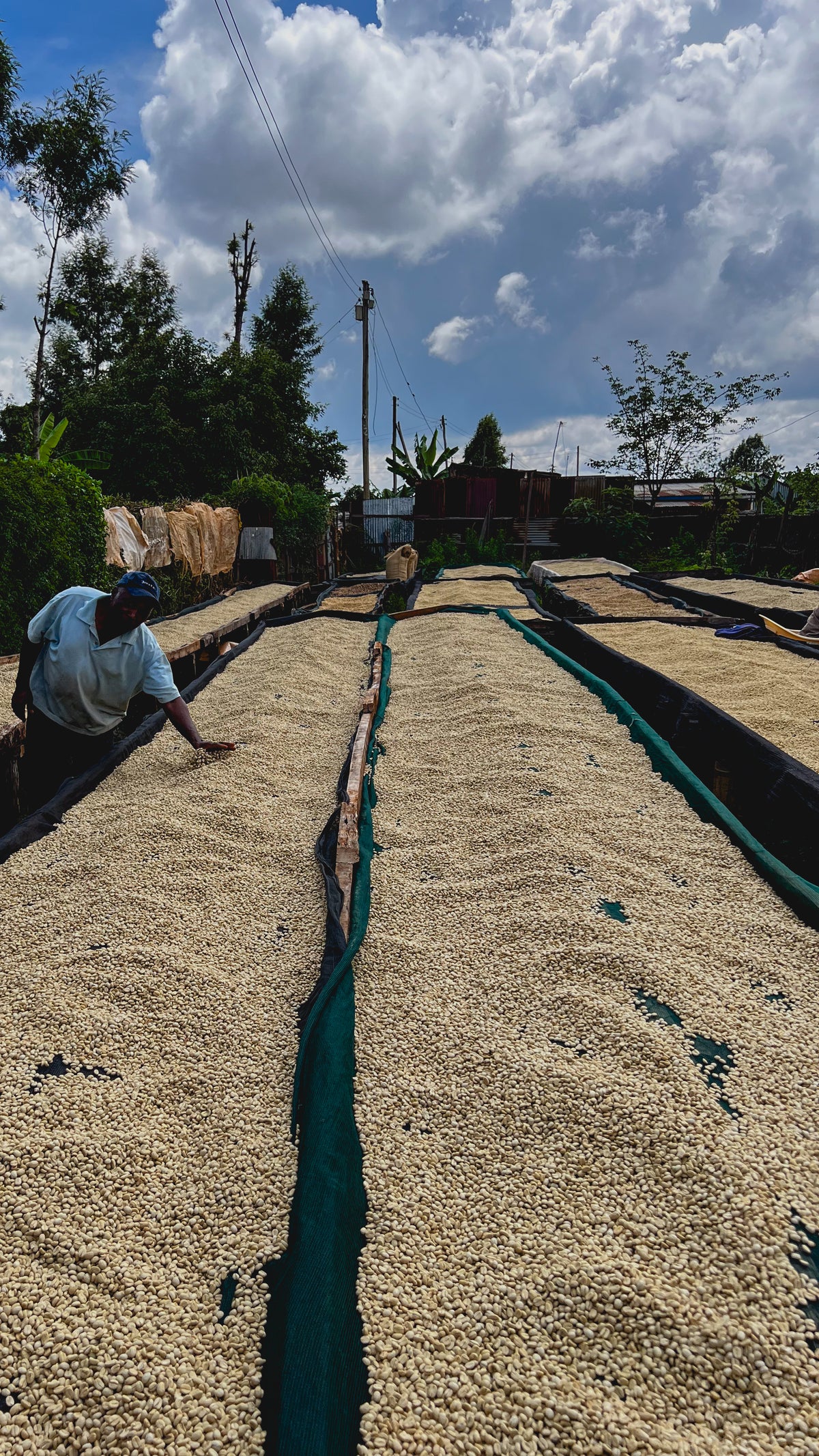
Once the cherries arrive, they are sorted before pulping. The parchment ferments overnight, then is washed and graded into P1, P2, P3, P lights, and pods. Finally, it dries on tables for approximately eight to fourteen days. This fully washed process depends on careful handling at every stage, from sorting through drying.
Investing in what comes next
Rungeto FCS has introduced practical improvements across its processing facilities. Tiled washing channels and fermentation tanks support processing quality; water used for processing is reused; and longer-lasting metal drying tables help reduce repair costs. These choices connect coffee quality with more durable infrastructure and resource management.
The seasonal shipping window typically runs from March through April. The producer sheet lists CAFE as the certification body. Behind this coffee is a cooperative, a washing station with a history of renewal, and the work of farmers whose harvest moves through a carefully managed process before reaching the cup.